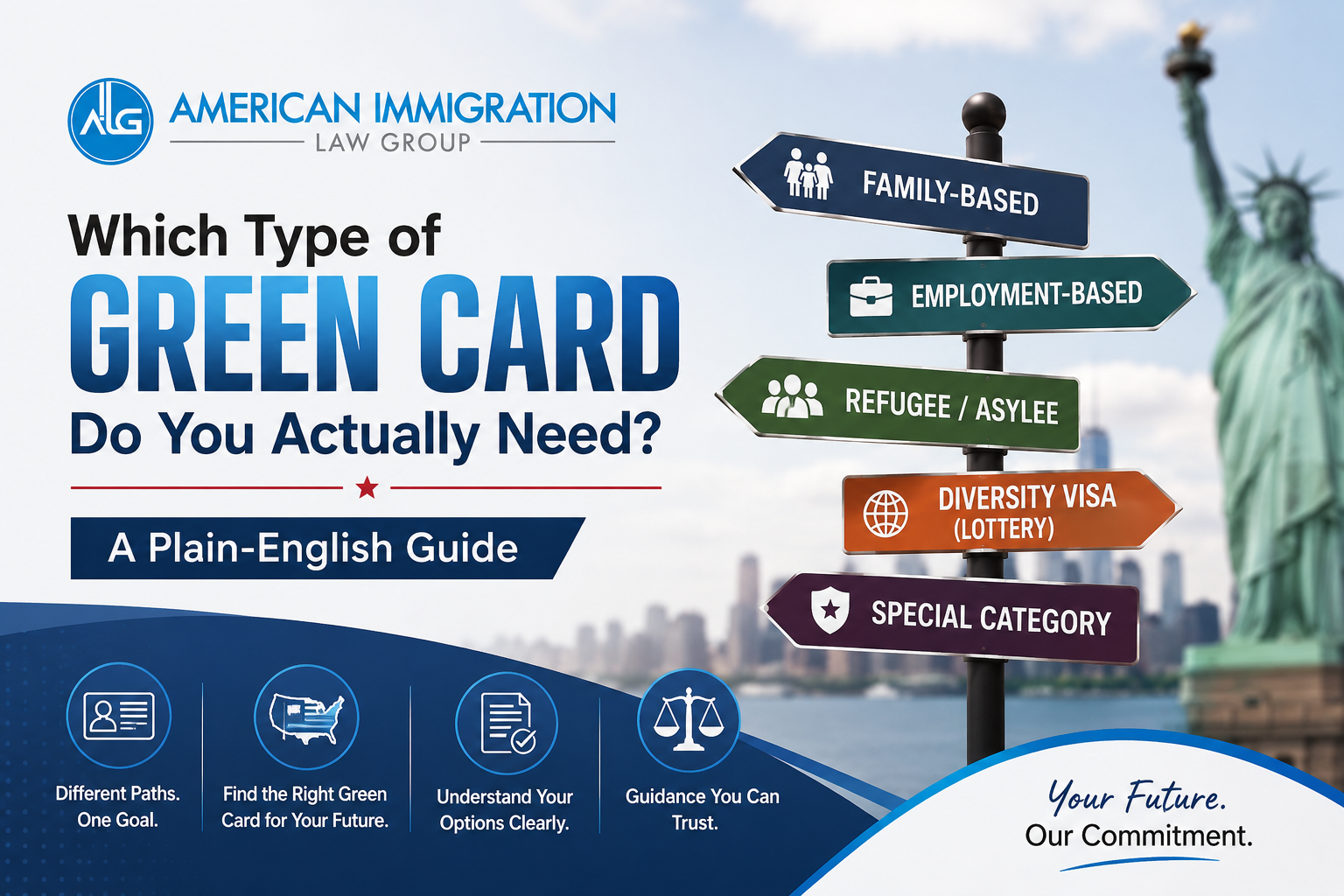
For most immigrants, the green card represents something far bigger than a piece of plastic — it’s the doorway to a stable, permanent life in the United States. The right to live where you choose, work without restrictions, and eventually pursue citizenship. But here’s something that surprises a lot of people: there isn’t just one type of green card. There are several, each designed for a different situation and pathway. Choosing the wrong one — or applying through the wrong category — can cost you months of processing time and unnecessary stress.
This guide breaks down the most common green card categories in plain terms, so you know where you stand before you take the first step.
The Main Types of Green Cards and Who Qualifies for Each
Family-Based Green Card
This is the most common pathway for people already connected to someone in the U.S. If you’re the spouse, parent, child, or sibling of a U.S. citizen, or the spouse or unmarried child of a lawful permanent resident, you may be eligible for a family-based green card.
The process generally starts with a sponsoring family member filing a petition on your behalf. Immediate relatives of U.S. citizens — spouses, unmarried children under 21, and parents of citizens who are at least 21 — tend to move through the process faster because there’s no annual cap on their visa numbers. Other family categories, like siblings of citizens or married adult children, fall under a preference system and often face longer wait times depending on the applicant’s home country.
It’s worth noting that being eligible is just the starting point. You also need to meet admissibility requirements, which include health, security, and financial checks. And the sponsoring family member must demonstrate they can financially support you — which is where the Affidavit of Support comes into play.
Employment-Based Green Card
If a U.S. employer wants to hire you permanently and is willing to sponsor you, an employment-based green card may be the right route. These green cards are divided into preference categories (EB-1 through EB-5) based on your level of skill, education, and the type of work involved.
EB-1 is reserved for people with extraordinary ability in their field, outstanding professors or researchers, and certain multinational executives. EB-2 and EB-3 cover professionals, skilled workers, and some unskilled workers. EB-4 covers special immigrants, and EB-5 is the investor visa category for those putting significant capital into U.S. businesses that create jobs.
Most employment-based categories require a job offer and a labor certification from the Department of Labor, proving that no qualified U.S. worker was available for the position.
Refugee or Asylee Green Card
If you were granted asylum or admitted to the U.S. as a refugee, you can apply for a green card after one year of living in the country under that status. This pathway acknowledges the unique circumstances that brought you here and provides a route toward permanent residency and, eventually, citizenship.
Diversity Visa (Lottery) Green Card
Each year, the U.S. government makes up to 50,000 green cards available through the Diversity Immigrant Visa Program — commonly called the green card lottery. It’s open to nationals of countries with historically low immigration rates to the United States.
Being selected in the lottery doesn’t automatically grant you a green card — it just makes you eligible to apply. You still need to meet all standard admissibility requirements and complete the full application process within the allocated timeframe.
Special Category Green Cards
There are several other green card categories for people in unique situations, including:
- Victims of human trafficking or crimes who hold a T or U visa
- Special immigrant juveniles who have been abused, abandoned, or neglected
- Religious workers sponsored by qualifying nonprofit religious organizations
- Returning residents who were permanent residents before but stayed outside the U.S. longer than permitted due to circumstances beyond their control
- Victims of domestic violence who qualify under VAWA (Violence Against Women Act) self-petitions
Each of these categories has its own eligibility criteria and documentation requirements. They exist because the immigration system recognizes that not everyone’s situation fits into the standard family or employment boxes.
From Green Card to Citizenship — Understanding the Connection
A green card is often described as a stepping stone, and that description holds up well. Once you’ve held your green card for a certain period — typically five years, or three years if you obtained it through marriage to a U.S. citizen — you may become eligible to apply for citizenship through naturalization.
Becoming a citizen opens doors that permanent residency doesn’t: the right to vote, the ability to hold a U.S. passport, eligibility for certain federal jobs, and the peace of mind that comes from knowing your status can’t be revoked due to extended time abroad. For many people, citizenship is always the long-term goal — and the green card is the necessary step to get there.
Finding the Right Path Forward
The green card process isn’t one-size-fits-all, and trying to navigate it alone — especially when there are multiple categories, strict deadlines, and detailed documentation requirements — can lead to costly mistakes. Whether you’re just starting to explore your options or you’ve already received a denial and need to appeal, getting the right legal guidance makes a real difference.
The team at American Immigration Law Group has spent over a decade helping individuals and families across Missouri understand their options and move through the green card process with confidence. From determining which category fits your situation to preparing your application and representing you in interviews, their support covers every stage of the journey. If you’re ready to take the next step toward permanent residency or simply want to understand where you stand, don’t hesitate to contact us — your path forward starts with a conversation.